
Overview
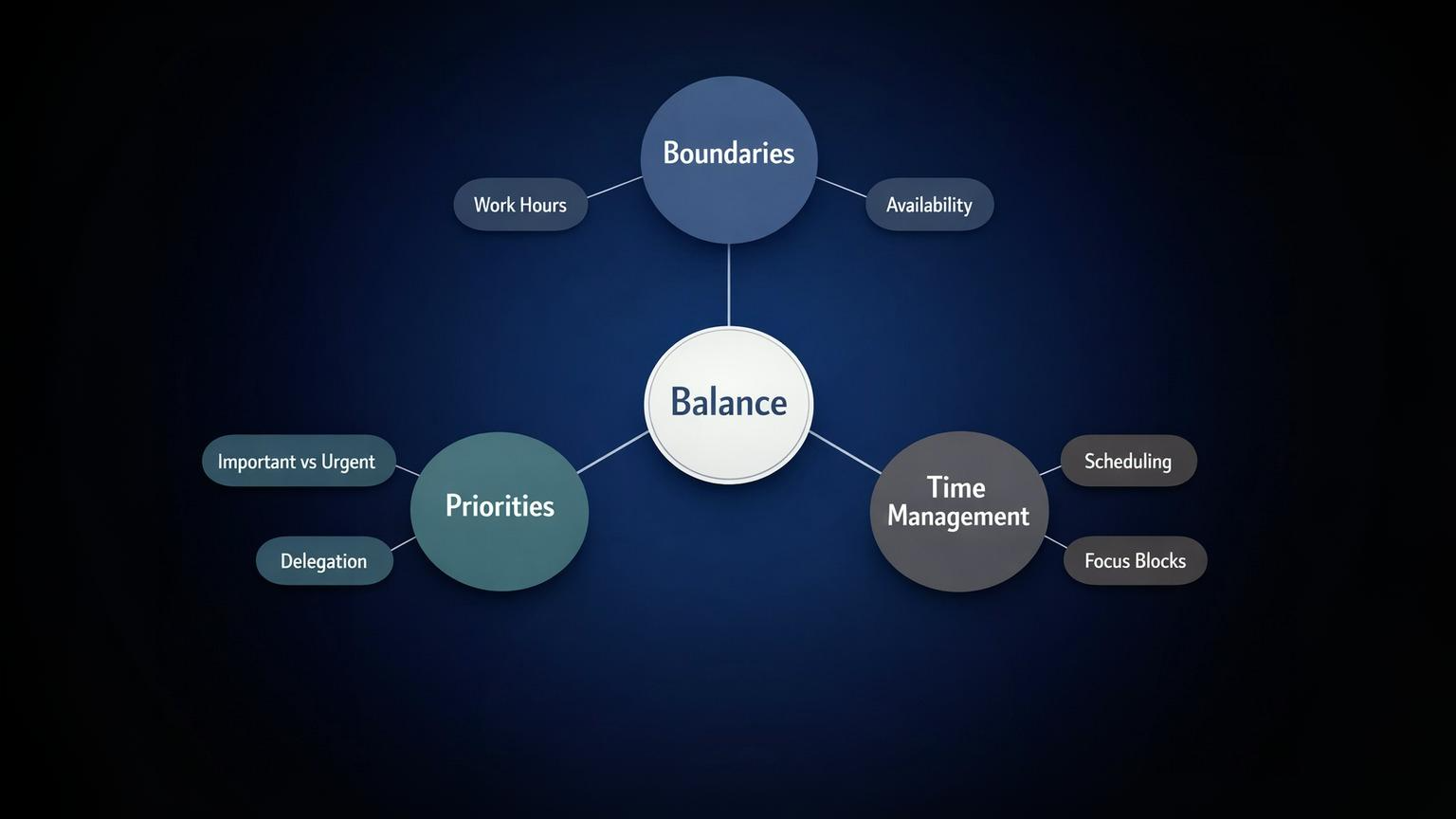
Work-life balance means creating boundaries between your professional responsibilities and personal life so neither consistently overwhelms the other. It's about managing your time, energy, and attention in ways that let you meet work obligations while still having space for relationships, health, and personal interests.
The core components include setting clear boundaries around work hours and availability, prioritizing what actually matters rather than reacting to everything, and managing time intentionally instead of letting demands control your schedule.
This isn't about employer policies or workplace culture—it's about personal strategies you can implement regardless of your job situation.
What Work-Life Balance Actually Means
Here's something that trips people up: balance doesn't mean spending exactly half your time on work and half on everything else. That's not realistic, and it's not the goal.
Balance is different from integration. Integration means blending work and personal life together—checking emails during dinner, taking personal calls during work hours. Balance means keeping them more separate, with clearer lines between when you're "on" for work and when you're not.
Your definition of balance will look different from someone else's. A parent with young children needs different boundaries than a single person in their twenties. Someone building a business faces different challenges than someone in a stable corporate job. What matters is that you're not consistently sacrificing one area of life because another has completely taken over.
The real question isn't "Am I splitting my time equally?". It's "Do I have enough space and energy for the things that matter outside of work?".
Why Work-Life Balance Matters
When work consistently bleeds into personal time, your mental health takes a hit. Chronic stress, anxiety, and burnout don't just make you feel bad—they affect your ability to think clearly, make decisions, and handle everyday challenges. You become more reactive, less patient, more likely to snap at people you care about.
Physical health follows the same pattern. Poor work-life balance usually means less sleep, worse eating habits, and no time for exercise. That combination increases your risk for serious health problems over time. Your body needs recovery time. Without it, you're running on fumes.
Productivity seems like it should increase when you work more hours, but it doesn't work that way. After a certain point, more hours mean worse output. Your focus drops. You make more mistakes. Tasks that should take thirty minutes stretch to an hour because you can't concentrate properly.
And relationships? They deteriorate when you're always distracted, always tired, always prioritizing work over the people in your life. Partners feel neglected. Kids grow up with an absent parent who's physically present but mentally elsewhere. Friendships fade because you never have time to nurture them.
Core Strategies to Maintain Balance
Set Clear Boundaries
Decide when your workday starts and ends. Then stick to it. This sounds obvious, but most people let work hours creep into morning routines and late evenings without really choosing to. Pick specific times. Communicate them. Honor them.
If you work from home, create physical separation. Work in one specific area—a dedicated room if possible, or at least a specific desk or corner. Don't work from your couch or bed. Your brain needs environmental cues that signal "this is work mode" and "this is personal mode.".
Set boundaries around how and when people can reach you. You don't need to be instantly available at all hours. Turn off notifications after work hours. Let people know when you'll respond to non-urgent messages. Most things can wait until tomorrow.
Prioritize Tasks Effectively
Not everything that feels urgent is actually important. Learn to tell the difference. Important tasks move you toward significant goals. Urgent tasks demand immediate attention but might not matter much long-term. Focus on what's important first.
Delegation isn't just for managers. Can someone else handle this task? If you're drowning in work partly because you insist on doing everything yourself, you're creating your own imbalance. Hand off what you can.
Practice saying no. You don't need an elaborate excuse. "I don't have capacity for that right now" is a complete answer. Every yes to a new commitment is a no to something else—often something more important to you personally.
Manage Time Intentionally
Time blocking works. Schedule blocks of time for specific activities—focused work, meetings, breaks, personal time. Treat personal time blocks with the same respect you give work meetings. Put exercise on your calendar. Schedule dinner with your family. Block off hobby time. If it's not scheduled, it probably won't happen.
Here's what many people get wrong: they schedule every minute for work and hope personal time somehow materializes in the gaps. Do the opposite. Schedule your personal priorities first, then fit work around them.
Minimize time wasters. Social media scrolling, unnecessary meetings, and unproductive multitasking drain hours without adding value to your work or life. Track where your time actually goes for a week. You'll spot patterns you didn't realize existed.
Use Technology Wisely
Notifications are designed to interrupt you. Turn most of them off. You don't need your phone buzzing every time someone likes a photo or sends a non-urgent email. Check messages on your schedule, not theirs.
Productivity tools can help—task managers, calendar apps, automation software. But don't get so caught up in optimizing your tools that the tools themselves become another time sink. Pick simple systems and use them consistently.
Digital detox means taking real breaks from screens and connectivity. Put your phone in another room during dinner. Don't check email first thing in the morning. Have device-free time before bed. Your brain needs space away from constant digital stimulation.
Take Care of Physical Health
Sleep isn't optional. When you consistently skimp on sleep to work more or stay up late, you're not gaining time—you're becoming less effective during your waking hours. Most adults need seven to nine hours. If you're regularly getting less sleep, your balance is off and your health will suffer.
Exercise doesn't require hours at a gym. Thirty minutes of movement most days makes a substantial difference in energy levels, stress management, and overall health. Walk during lunch. Do a quick workout before work. Find something you'll actually do consistently rather than an elaborate plan you'll abandon.
Meal planning prevents the default pattern of skipping meals or eating garbage because you're too busy to think about food. Plan what you'll eat, prep when possible, and treat meals as non-negotiable breaks rather than interruptions.
Protect Personal Time
Family commitments aren't things you fit in "if you have time." They're priorities. Be present when you're with family—not checking your phone, not thinking about work. Quality matters more than quantity, but you need both.
Hobbies aren't frivolous. They're how you maintain parts of your identity that exist outside of work. Make space for activities you enjoy purely because they interest you, not because they're productive or career-relevant.
Social connection matters for mental health and life satisfaction. Make time for friends. Have conversations that aren't about work. Invest in relationships even when—especially when—work feels overwhelming.
Work-Life Balance for Different Situations
Remote Workers
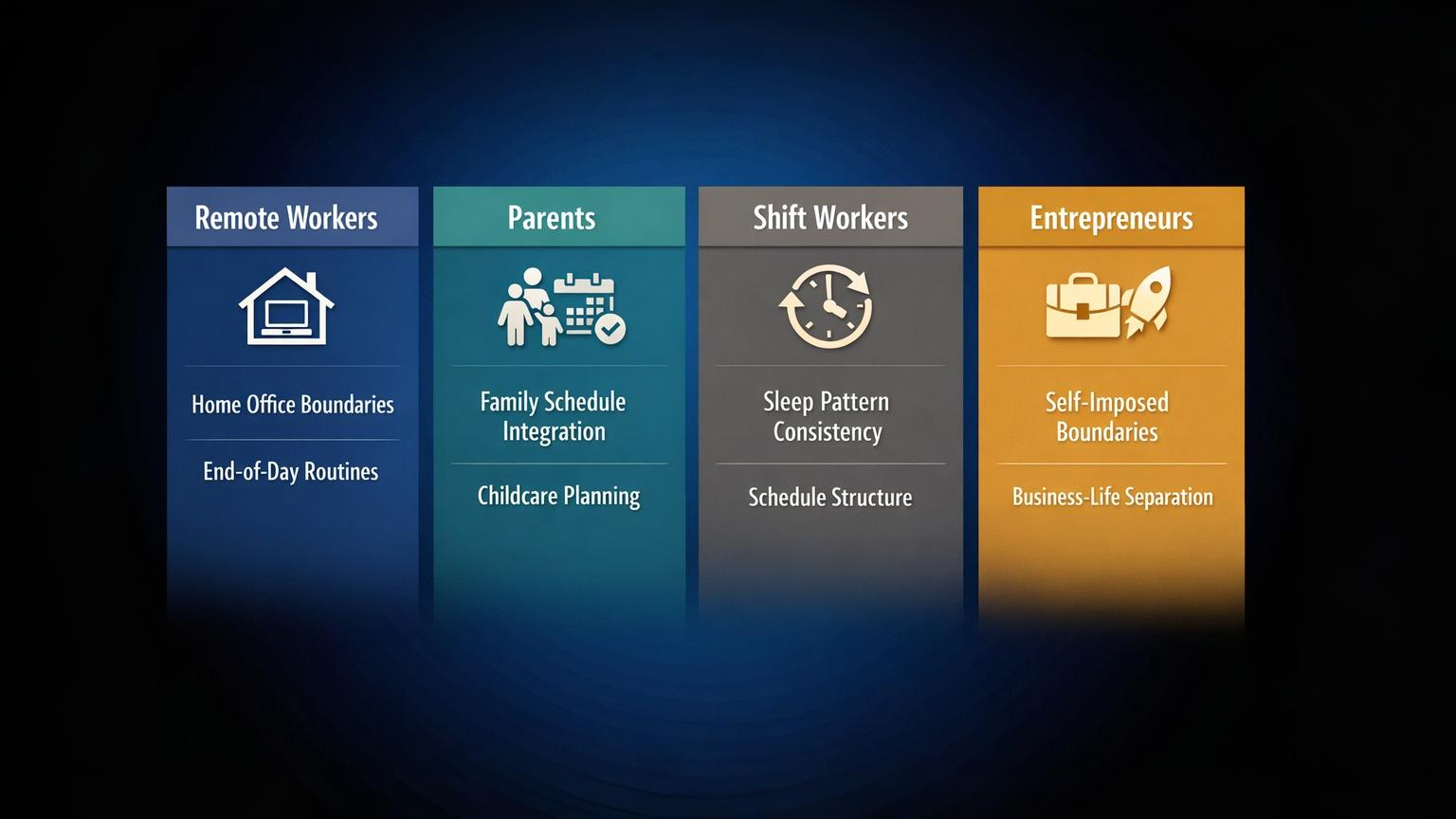
Home office boundaries become critical when your workplace and living space are the same. Create a clear start and end to your workday with routines—get dressed, "commute" by walking around the block, shut down your computer completely at day's end.
Overwork tendency is real for remote workers. Without the natural boundaries of leaving an office, many people work longer hours from home than they ever did in person. You still need to stop working. Close your laptop. Leave your work area.
Parents
Childcare coordination requires planning. Map out who's handling what, when. Have backup plans. Share calendars with partners or family members who help with childcare. Don't try to wing it every day—that path leads to constant stress.
Family schedule integration means actually putting family obligations on your work calendar. School pickup isn't less important than a meeting. Doctor appointments for your kids matter. Put them on the schedule and protect that time.
Shift Workers
Irregular schedule management is harder but still possible. The key is consistency within your pattern. If you work nights, keep a similar sleep schedule even on days off. Don't flip back and forth—it wrecks your body.
Sleep pattern maintenance becomes your primary balance tool. Whatever your shifts, prioritize sleep. Black-out curtains, white noise machines, and a strict sleep schedule help when you're sleeping during hours your neighbors are awake.
Entrepreneurs
Business-life separation is the biggest challenge when you own the work. The business's success or failure feels entirely on you, making it hard to ever fully disconnect. But working around the clock doesn't make your business more successful—it makes you burned out and less effective.
Self-imposed boundaries matter even more because no one else will enforce them. Set your own working hours. Give yourself weekends or regular days off. You're the boss—act like it and give yourself reasonable working conditions.
Common Obstacles and Solutions
Workload Too Heavy
Assess whether your workload is actually impossible or just poorly organized. Track what you're doing and how long it takes. Sometimes the problem isn't volume—it's inefficiency or poor prioritization.
Manager conversation strategy: approach your manager with specific data about your workload, not just a complaint that you're busy. Show what you're working on, how long tasks take, and ask which priorities should shift if something new gets added.
Always Available Expectation
Boundary communication needs to be explicit. Tell your team, your boss, and clients when you're available and when you're not. Most people will respect boundaries if you actually set them. They won't if you just quietly resent being contacted outside work hours while still responding immediately.
Response time setting means clarifying expectations. "I check email twice a day" or "I respond to messages within 24 hours" gives people a framework. If everything is treated as urgent, nothing actually is.
Guilt About Personal Time
Mindset shift: your worth isn't determined by constant productivity. Taking time for yourself isn't selfish—it's maintenance. You can't sustain performance without recovery.
Self-worth separation from productivity means recognizing that you're valuable as a person, not just as a worker. Your relationships, health, and happiness matter independently of your professional output.
Lack of Support
Support system building starts with asking for help. Tell your partner, family, or friends what you need. People who care about you generally want to help—they just don't always know how unless you tell them.
External help consideration: hiring help for things like cleaning, childcare, or yard work isn't an extravagance if it creates time and energy for what matters more to you. It's a strategic choice about where your time goes.
Signs Your Balance Is Off
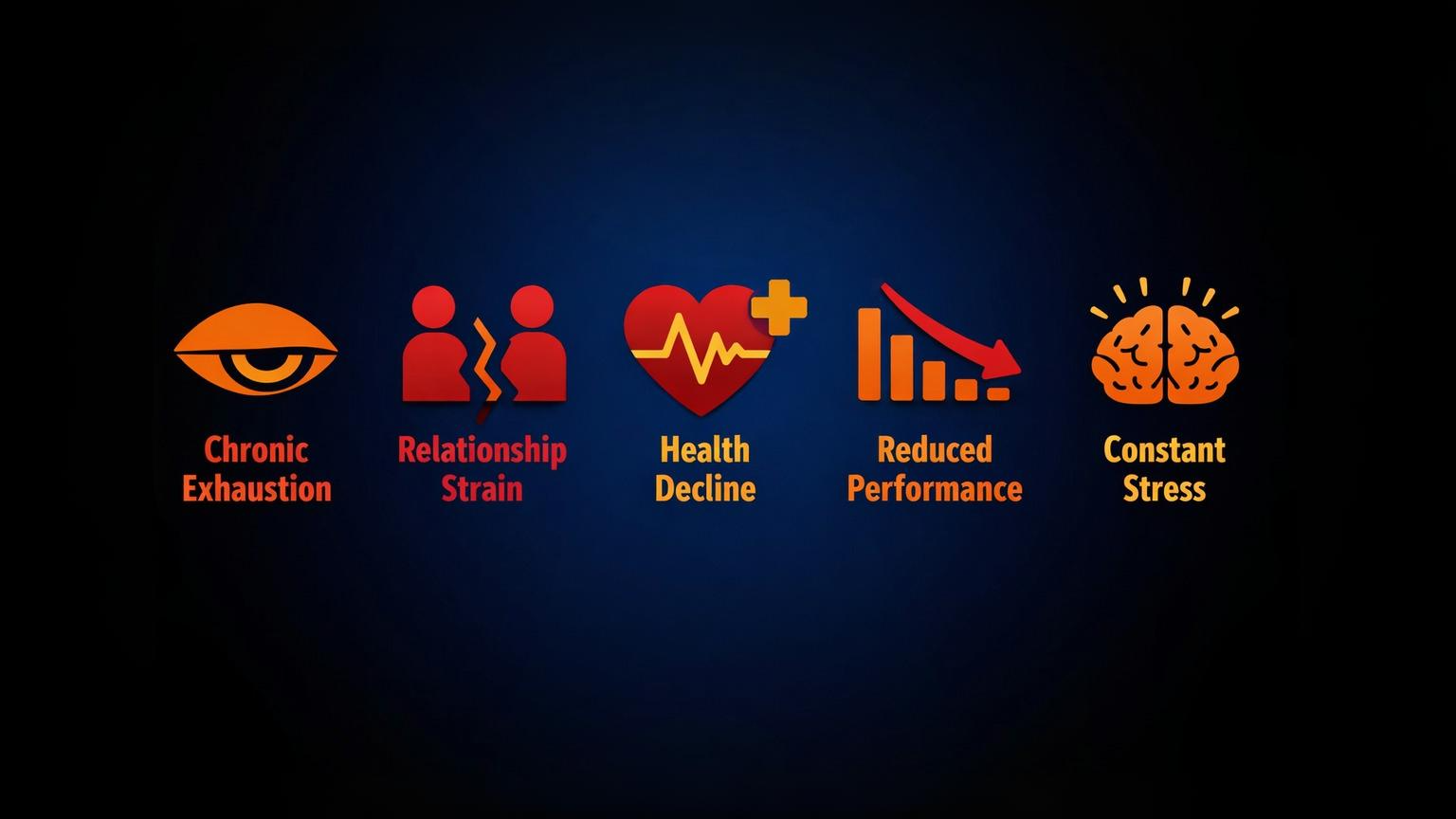
Chronic exhaustion that doesn't improve with a night's sleep means you're depleted beyond normal tiredness. If you're always tired no matter how much you rest, something's wrong with your balance.
Relationship strain shows up as increased conflict, less quality time together, and feeling disconnected from people you care about. When work consistently wins over personal relationships, those relationships deteriorate.
Health decline—frequent illness, weight changes, digestive problems, headaches—often signals that stress and poor self-care are catching up with you. Your body keeps score even when you ignore the signals.
Reduced work performance seems counterintuitive, but working constantly makes you worse at your job, not better. If your output quality is dropping despite putting in more hours, you're past the point of diminishing returns.
Constant stress feeling, where you can't relax even during supposedly off time, indicates your nervous system is stuck in high gear. That's not sustainable.
Common Mistakes to Avoid
-
Perfectionism trap: trying to do everything perfectly ensures you'll never have balance. Good enough is actually good enough for most things. Perfectionism is often just fear of judgment disguised as high standards.
-
Neglecting small self-care adds up. Skipping lunch, staying up too late, canceling plans with friends—these seem like minor sacrifices in the moment, but they compound into serious problems.
-
Assuming balance looks the same every day sets you up for failure. Some weeks are heavier than others. Some days you work more, some days less. Balance is more about averages over time than perfect daily splits.
-
Ignoring early warning signs means you'll eventually hit a wall. Fatigue, irritability, and declining health don't appear overnight—they build gradually while you tell yourself you'll deal with it later.
-
Not communicating needs assumes people should just know what you need. They don't. Tell your boss, your partner, your family what boundaries you need and what support would help.
How to Get Started Today
Pick one boundary to set right now. Not five—one. Maybe it's turning off work notifications after 6 PM. Maybe it's blocking lunch on your calendar so meetings can't eat that time. Choose something specific and implement it today.
For week one, focus on consistency with that single boundary. Don't add more changes yet. Just practice maintaining one clear limit and notice what happens. Often, people discover that the world doesn't fall apart when they set a reasonable boundary.
Review and adjust after a week. Is this boundary working? Do you need to modify it? What boundary might you add next? Build your balance strategy gradually rather than attempting a complete life overhaul that lasts three days before collapsing.
Frequently Asked Questions (FAQ)
1. How long does it take to achieve work-life balance?
Balance isn't a destination you reach and then maintain forever. It's ongoing adjustment as your situation changes. You can start seeing improvements within a week or two of implementing clear boundaries, but expect to keep refining your approach over months and years.
2. Is work-life balance possible with a demanding job?
Yes, though it requires being more intentional about boundaries and priorities. Demanding jobs don't automatically mean zero personal life—they mean you need to be strategic about protecting time, managing your energy, and being clear about your limits.
3. What if my employer doesn't respect my boundaries?
Start by setting and communicating boundaries clearly—many boundary violations happen because expectations were never explicitly stated. If your employer continues to disrespect reasonable boundaries after clear communication, you face a decision about whether this job is sustainable long-term.
4. Should work-life balance be a 50/50 split?
No. Balance doesn't mean equal time. It means having adequate time and energy for what matters in your personal life while meeting your work responsibilities. The specific split varies by person, life stage, and situation.
5. How do I maintain balance during busy seasons?
Accept that balance shifts temporarily during genuinely busy periods. The key is making sure they're actually temporary and that you're scheduling recovery time afterward. If every season is the busy season, that's not a seasonal issue—that's a chronic workload problem.
6. What if I feel guilty taking personal time?
That guilt often comes from believing your worth depends on constant productivity. Challenge that belief. Personal time isn't time stolen from work—it's time invested in maintaining your health, relationships, and long-term effectiveness. You can't sustain performance without it.
7. Can I have work-life balance as an entrepreneur?
Yes, but you'll have to enforce it yourself since no one else will. Entrepreneurs often work more hours initially, but that's not sustainable indefinitely. Set working hours even though you're the boss. Take days off. Separate business finances from personal finances so you're not constantly thinking about business.
8. How do I talk to my manager about boundaries?
Be specific and solution-focused. Instead of "I'm overwhelmed," try "I want to discuss my current workload and priorities to ensure I'm focusing on what's most important." Frame boundaries as professional decisions that help you do your job well, not personal preferences you hope they'll accommodate.
Final Summary
Work-life balance comes down to setting and maintaining boundaries between your professional and personal life so neither consistently dominates the other. The core principle is intentionality—actively managing your time, energy, and attention rather than letting work demands control your entire schedule by default.
Practical takeaways: Start with one specific boundary and maintain it consistently before adding others. Schedule personal priorities on your calendar with the same respect you give work commitments. Say no to commitments that don't align with your priorities. Protect your physical health through adequate sleep, regular movement, and reasonable eating patterns. Communicate your boundaries clearly to employers, family, and yourself.
Remember these limits: Balance isn't a 50/50 time split or a fixed state you achieve once and maintain forever. It shifts as your situation changes and requires ongoing adjustment. Not every boundary will work in every workplace, and some jobs may genuinely be incompatible with sustainable balance—recognizing that is important information rather than personal failure. You can't control all demands on your time, but you can control how you respond to them and what you're willing to protect.
Published by URX Media, a platform focused on learning and explaining digital marketing, business and technology concepts through simple, accurate breakdowns.
📚Related Articles


Can I Do Online Business Without GST? (Explained for India)
Yes, you can do online business without GST in India, but only in specific situations. GST registration is not required if your annual turnover stays below the prescribed threshold, you do not make inter-state sales, and you’re not selling through most large marketplaces. This applies mainly to small sellers, freelancers, bloggers, and early-stage online businesses operating within one state.